
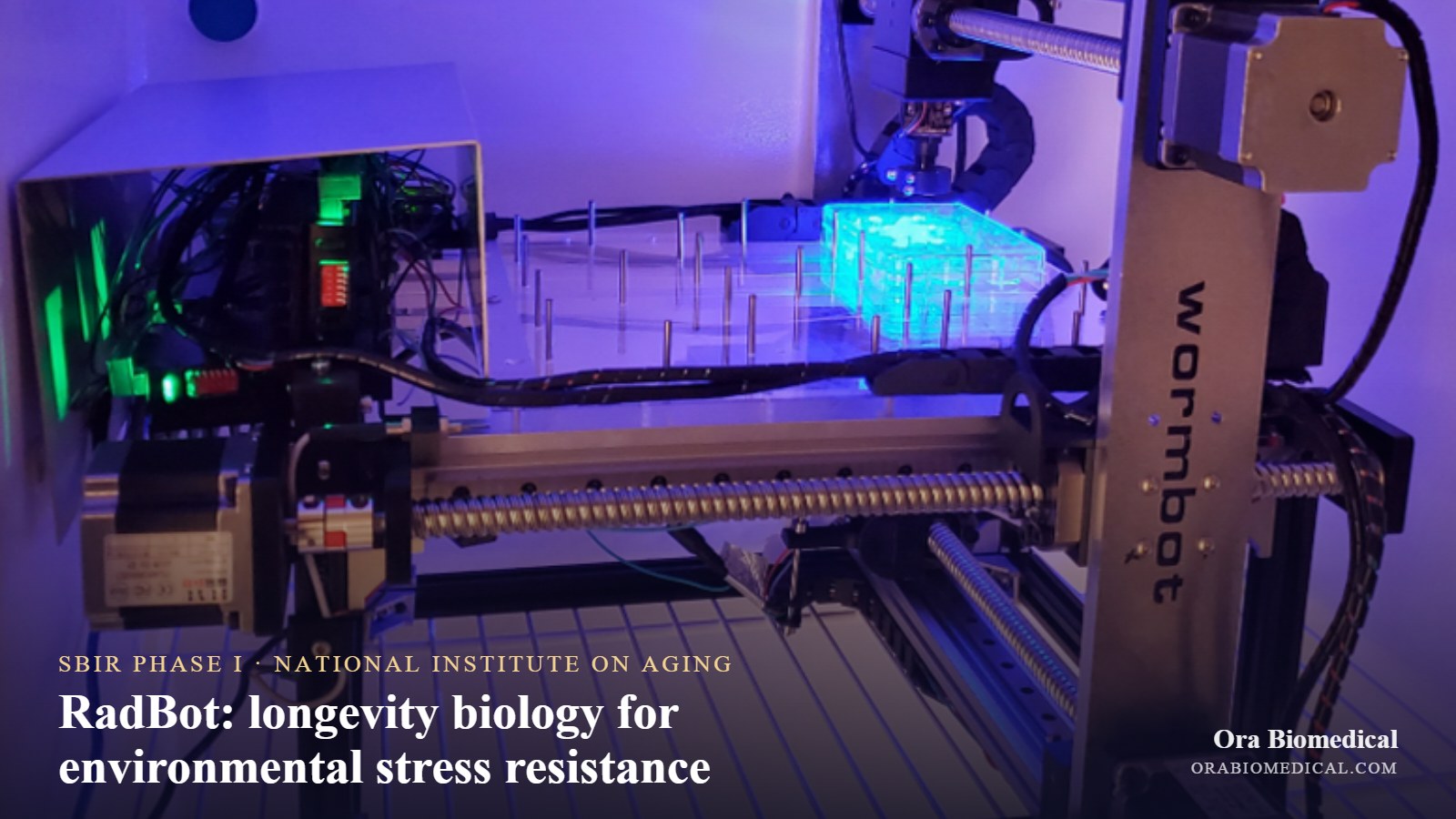
Ora Biomedical has received a Small Business Innovation Research (SBIR) Phase I award from the National Institute on Aging, part of the National Institutes of Health, for a program called RadBot. Ben Blue, Ora’s CEO, is principal investigator.
RadBot applies Ora’s WormBot platform to a question at the center of the company’s work: whether compounds that extend lifespan in a whole organism also protect tissue against environmental damage. Under the one-year award, Ora will screen a natural-product library for UV resilience in C. elegans and carry the top hits into human cell validation.
“This represents another milestone in Ora’s vision of translating longevity interventions into tractable improvements to human health,” said Blue. “Starting with advancing these molecules into the field of UV resilience and repair, we’re paving the way for more utility and access to longevity medicine–derived technologies.”
The award is Ora’s third federal SBIR Phase I, following a U.S. Air Force program on radiation resilience and a program from the NIH Office of Research Infrastructure Programs on the screening platform itself. Together they support the two tracks Ora is pursuing: skin health, and radiation dermatitis and injury repair.
Partners interested in environmental-stress or skin-resilience screening can get in touch.
Research reported in this publication is supported by the National Institute on Aging of the National Institutes of Health under Award Number R43AG102309. The content is solely the responsibility of the authors and does not necessarily represent the official views of the National Institutes of Health.