
The platform · WormBot
High-throughput lifespan screening in a living animal.
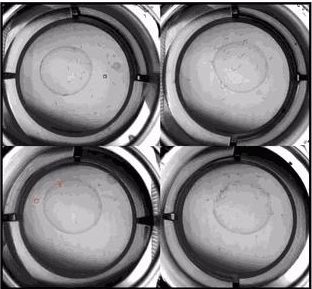
WormBot combines robotics, computer vision and machine learning to test thousands of compounds for their effect on lifespan in C. elegans.
Why this animal
A whole life inside three weeks.
A lifespan experiment in C. elegans takes about three weeks, which is short enough to repeat at library scale. No other whole animal gives a lifespan endpoint at that cost.
The processes that age skin, including DNA damage, matrix breakdown and senescence, also shorten a worm’s life. We screen against the whole-organism outcome and study the individual processes afterwards in human cells.

The problem
Aging has no single target, so a single-target screen misses most of what works.
What aging is
DNA damage, loss of proteostasis, senescence, mitochondrial decline, matrix loss and chronic inflammation, each affecting the others. No single one of these is the disease, so a useful intervention has to improve the whole system rather than one marker.
What a target hypothesis can see
A target-based screen tests one pathway with one assay. Compounds that work through a pathway the hypothesis did not name are never tested, so the search is only as wide as the initial guess.
The data
Most compounds do nothing. The dataset keeps every one of them.
Every screen adds to a dataset linking a molecule to a whole-organism outcome, positive or negative. Data of that kind barely exists elsewhere at this scale, and it is what trains the next round of screening.
Analysis set: one library, 3,794 distinct treatments (4,879 conditions including dose variants) across 208 runs, each normalized to its own control. The ~10,000 molecules and ~1,000,000 observations cover the whole screen, which is larger than this set.
The scale
About 10,000 compounds tested on one platform. The public record lists about 1,000 with a reported effect.
Models of aging are short of one input: interventions paired with a whole-organism outcome.
DrugAge lists published compounds with a reported lifespan effect (Human Ageing Genomic Resources, retrieved September 2026); Ora’s figure counts compounds tested, positive and negative. The comparison is about scale in one place, under one protocol.
The AI · OraGen
OraGen retrains after every screen.
Every screen returns intervention-to-outcome data at organism scale. OraGen retrains on it, then chooses the next set of compounds to run.
Large effects go into the product and therapy programs; small ones stay in the training set.
Beyond lifespan
Complex signals from a simple animal.
The same imaging run returns motility and body size alongside survival. Compounds with comparable lifespan gains can carry different healthspan signatures: the same gain in days, different shapes of aging.
What comes next for the platform is on the pipeline page.